
I think that we too often confuse racism and pattern recognition. Conflating one with the other. For example, if I can properly identify with 100% accuracy a segment of a population. Say, black people who are violent, white people who are meth heads, or Indians who will poop in public spaces, am I practicing racism or pattern recognition?
Racism implies either myself or the policies I support would have a component that targets a particular racial or ethnic group. But there are so many different identifiers that could single out this group in a disproportionate way.
For example a lot of the time you can identify public poopers, store robbers, or other poor actors by their smell or appearance. Sometimes you can identify them based on how they act under scrutiny (immediate anger being a bad indicator), or how they react when coming into contact with law enforcement.
Now, it is impossible to have 100% accuracy. So where does racism start factoring in as a component?
And I ask because this causes real problems. Many trains of thought target ideas or actions but fundamentally speak to one ethnic group.
Neutral terms and stereotypes
Take, for example, a neutral term such as illegal immigrant. This term does not carry with it any indicator for color. You can have white illegal immigrants or brown illegal immigrants or yellow illegal immigrants. The initial term is completely neutral.
Yet, whenever people hear the term illegal immigrant, they immediately form an image in their mind of someone they think fits that description. Very often, even in minority groups, the image that forms is that of someone of color (at least in the US).
Now, you could consider this racist, but in that assumption you are leaving out a key component. Roughly 80% of people who immigrate to the United States are people of color. So is conflating immigration with people of color racist, or pattern recognition?
Or we could look at stereotypes. Stereotypes are pattern recognition of a culture, not necessarily a specific skin color. The two are extremely hard to separate, which is why racism comes so easily to the lips of people who don’t like white people wearing sombreros.
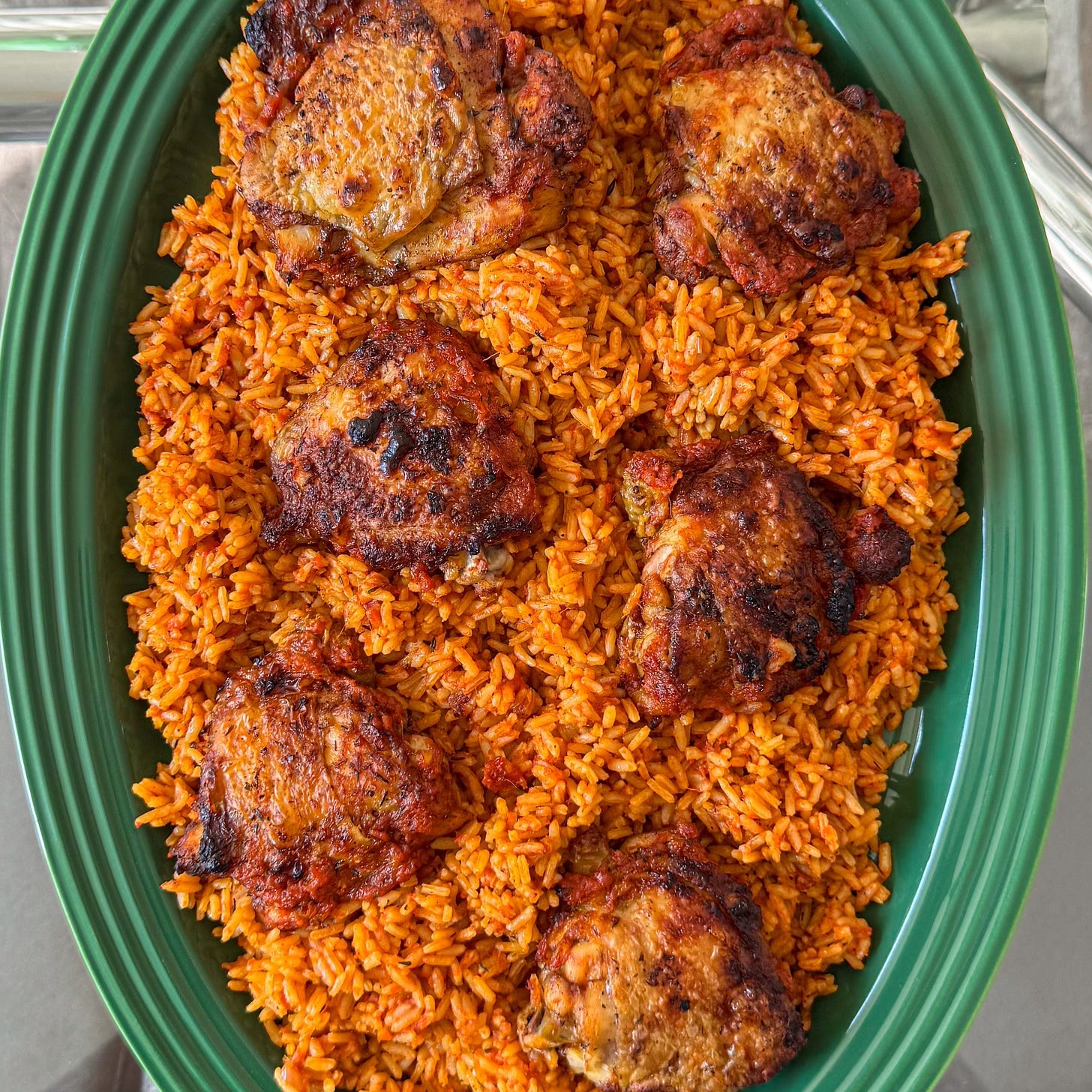
Yet stereotypes exist because of pattern recognition. It’s not like someone decided one day that the Japanese like rice, and forced the Japanese to eat rice. Instead, everywhere you go in Japan, the people eat rice. You could apply the same thing to Mexicans and tacos, or African Americans and chicken. (and Jollof rice with chicken is the best)
Stereotypes are also used as a way to understand cultures and decrease discrimination (sometimes). It is much easier to adjust to a foreign culture if you understand generalities. It also becomes much easier to start conversations if you begin jokingly with a stereotype.
Or we could look at positive pattern recognition. In Africa, if you are white or fat you are assumed to be rich. This isn’t an accurate assessment a large majority of the time, but what is true is that those who visit Africa have much more disposable income, and can purchase random do-dads.
Because of this, white tourists in Africa are charged very high prices for goods at open air markets. Yet I have never heard of anyone complaining that this was racist, even though it is. In fact, this type of pattern recognition encourages increased interaction with African culture. You need to learn both about bartering (which is extremely fun) and dashing (where you get a small gift after making a purchase). We could also look at ideas and trains of thought.
Ideas, culture, and ethnicity
What about critiques of specific ideas that target a disproportionately large amount of one group? Take for example my own criticism of Islam, which is as follows. I dislike that Islam can look at their prophet Muhammad and use him to justify things like child marriage (married a 6 year old and “consummated the marriage” at 9 years old), or things like warlike tendencies, which Muhammad had (he conquered foreign nations).
Now, I can apply this to not wanting Islam to be allowed into Christian countries, where child marriage and a warlike nature are very negative. But people would call me racist for such a thing because a majority of those who follow Islam are not white, even though I care about the idea and not the race.
Or you could take friendship groups. My younger brother had multiple friends of a different ethnicity than him. Despite this, he was considered racist simply because he is white.
And people take this the other direction as well. Individuals with only one color friend group are often thought to be racist. But is it racism, or simply pattern recognition that people who share a cultural background are easier to get along with?
For example, often times with a group of black friends the word “nigger” is tossed around without much care. Yet any non-black person who uses the word is immediately branded, no matter if they used the hard ‘r’ or the friendly “my nigga”. Is it not less risky to avoid this group, so as to avoid accidentally using the “terrible n word”?
And this word usage also extends into culture. Culture and ethnicity also tend to go hand in hand.
Take, for example, ghetto culture. This isn’t a “colored” term. There is no inherent racism with this phrase. Yet people usually associate this culture with the African American community.
This is important because there are a growing number of people who claim “black fatigue” in response to repeatedly seeing this ghetto culture publicized.
You could argue that this is racism. But I am pretty sure these people would have just as much fatigue for a white person exhibiting ghetto culture. I know I have had an equal amount of fatigue encountering ghetto-like individuals in Australia, and none of them have been black.
Or you could look at cultural differences that cause large differences in how an individual treats society. I can point to two very recent examples of this in the Minnesotan Somalis and the New York Jewish population.
In both cases, I don’t dislike these individuals because of their skin color. I dislike these individuals because their culture (religion specifically) is extremely clan-like and tight-knit. Because of this, they can build entire communities that provide no meaningful work, but scam the ever living hell out of taxpayers.
Even worse, when you confront either group about the fraud, you encounter two extremely annoying problems.
First, for a majority of the individuals, English is not their native language. This increases both how bad the group looks in the eye of the public, and how they look to the general US population.
Second, because of the clan-like nature of these groups, condemnation of the scamming does not occur within the group itself. There are incentives to ignore all criticism, not integrate into American society, and continue committing fraud.
None of it has to do with racism. It is pattern recognition that individuals with different family and cultural values do not act in the same way. So when does this pattern recognition stop and racism begin?
Racism
The definition of racism is as follows - prejudice, discrimination, or antagonism by an individual, community, or institution against a person or people on the basis of their membership of a particular racial or ethnic group
This is a good basis for how to differentiate between pattern recognition and racism. If your reasoning is going after anything other than skin color, you are not racist.
But this definition also brings in a different problem. What happens when the reasons slightly overlap? Or what happens when the enforcement of a movement targets largely one skin color?
Take, for example, my dislike of the Somalians scamming the welfare system. It doesn’t matter to me if they are yellow, black, brown, or rainbow puke colored. This is also why I don’t like the Jews doing it, or heck, even Americans that do it.
Yet the targeting of the Somalians is particularly vitriolic. I don’t doubt that this is due to a combination of the before-mentioned black fatigue, and the increasing hardships within America.
And when these scammers are (hopefully) caught and brought to justice, I guarantee that race will be used to help identify individuals who might be part of the scamming. But to what degree?
Take, for example, a theoretical search of a house for individuals involved with the scams. The police will likely notice that the majority of these individuals are a similar skin color. Then, when they later try to find more people involved, their first choice is going to be people who match that skin color.
But there are also other criteria for who to bring in for questioning. It might have more to do with a person’s accent, how nervous they are acting, or if they are in close proximity to the area of the crime. If the initial diagnosis is based off race or proximity, but the final decision is made due to alternate factors, is it still racism? Even more importantly, if the guess is correct because of pattern recognition (not of just skin, but actions, accents, etc.), is it still racism?
Or you could look at the danger of a situation. You will probably cross the street if you see someone threatening coming down the street, especially at night. This is particularly noticed by black individuals, but that is because black people are usually bigger, and have larger muscles supported by more dense bones.
So if pattern recognition can be used to explain actions that seem racist but aren’t, where do we draw the “racism line”? Is 80% accuracy high enough to not be racist? Is 50% too low? Does the type of circumstance change the percentage necessary? These are all questions I don’t have the answer to, but I think about often.
The distinction is important. The term racism has been so overused, that I can now, with near 100% accuracy, determine the political opinions of a person who declares that someone else is racist. The term has lost all weight and meaning, and that’s a very bad thing.
We need to find and determine the proper context for when racism is actually accurate. Using “racist” as a brand for anyone you dislike or disagree with makes people not care. And when you have a generation that has been called racist for no reason, they are going to stop caring about the label. Then you’ll get real racists, and it will not end well for anyone.
So where does pattern recognition stop and racism begin?
I would love to hear your comments on this fascinating issue.


